


















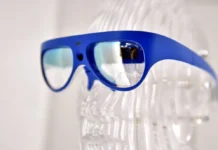












Privacy is increasingly becoming a relic of the past in our tech-driven world. With AI-powered glasses entering the market, this concern is no longer hypothetical—it’s a reality. Imagine walking down the street and having a stranger’s personal information pop up right before your eyes. Sounds like science fiction? Not anymore. AI glasses now have the power to recognize people in real time, turning every passerby into a living dataset.
What Are AI-Powered Glasses?
AI-powered glasses are wearable devices equipped with advanced artificial intelligence algorithms capable of analyzing the environment, identifying objects, and even recognizing faces. Think of them as smartphones you wear, but with instant, on-the-go insights. Major tech companies like Meta and Alibaba are spearheading this revolution, releasing models that integrate displays, cameras, and AI processors in a sleek, user-friendly design.
How AI Glasses Recognize People
These glasses rely on facial recognition technology, matching faces to massive databases of publicly available information. Within seconds, the wearer can access a person’s name, social media profiles, LinkedIn details, and even work history. The AI doesn’t sleep—it continuously scans, processes, and retrieves data, making real-time recognition almost seamless.
The Dutch Journalist Experiment
Recently, a Dutch journalist tested a pair of AI-powered glasses on the streets. The results were astonishing. In a widely circulated video, the glasses instantly displayed the identity and online profiles of strangers just by looking at them. This experiment highlighted the sheer speed and efficiency of these devices—and the alarming ease with which personal data can be exposed.
The Invasion of Personal Data
The technology effectively removes any semblance of anonymity in public spaces. Names, social media accounts, and professional profiles are laid bare before anyone wearing these glasses. The implications are staggering: a casual walk in the city could unintentionally expose your life’s details to strangers, creating a society where privacy is virtually nonexistent.
The Blurring Line Between Seeing and Knowing
With AI glasses, seeing someone is no longer just a visual experience—it’s an instant dive into their digital footprint. The line between observing and knowing has blurred, leaving individuals feeling constantly surveilled. This shift raises serious questions about the human experience of public life and personal boundaries.
Ethical Concerns Surrounding AI Glasses
The introduction of these devices has sparked heated debates about ethics. Consent becomes nearly impossible to manage—can someone really agree to be recognized on the street? The potential for misuse is enormous, ranging from stalking to corporate espionage, creating an urgent need for ethical guidelines and regulations.
Major Players in AI Glasses
Meta Ray-Ban Display Glasses
Meta recently launched its $799 Ray-Ban Display glasses. With a built-in display, these glasses aim to merge social connectivity with AR experiences. However, their facial recognition capabilities raise serious privacy concerns.
Alibaba Quark AI Glasses
Alibaba entered the race with Quark AI glasses, including the S1 and G1 models. These devices are optimized for rapid identification and information retrieval, reflecting the competitive push in the AI wearable market.
Potential Benefits of AI Glasses
Despite privacy fears, AI glasses offer notable advantages. They can assist professionals by instantly providing context about contacts in networking situations, help visually impaired individuals navigate environments, or even enhance learning by offering real-time educational overlays.
Privacy Risks in Daily Life
Everyday activities now carry unexpected risks. A stroll in the park, attending a concert, or waiting in line could expose your personal information to anyone equipped with AI glasses. The “right to blend in” is under siege, fundamentally altering how people experience public spaces.
Legal Landscape and Regulations
Currently, facial recognition laws lag behind technological developments. Some regions have strict data protection policies, while others lack comprehensive legislation. This gap allows AI glasses to operate in a largely unregulated environment, leaving individuals vulnerable to privacy violations.
Tech vs. Human Rights
The rise of AI glasses presents a stark ethical dilemma. Is technological convenience worth sacrificing the right to remain anonymous? Constant surveillance threatens fundamental human rights, forcing society to question where we draw the line between innovation and intrusion.
Protecting Yourself Against AI Surveillance
While AI glasses pose a challenge, there are ways to protect privacy. Digital hygiene practices, such as limiting public profile exposure and using privacy settings, can help. Additionally, emerging privacy-enhancing technologies, like anti-facial recognition accessories, offer a layer of protection against unwanted recognition.
The Future of AI Glasses and Privacy
AI glasses will only become more sophisticated, making privacy protection even more critical. Future developments may include stricter regulations, ethical design protocols, and AI systems designed to respect anonymity. Awareness and proactive measures are essential to ensure technology serves humanity, not surveils it.
Conclusion
AI-powered glasses represent both a technological marvel and a significant privacy threat. They turn every face into a potential dataset, blurring the line between public and private life. As the market grows, society must grapple with ethical questions, regulatory gaps, and the need to protect human dignity. The future will depend on our ability to balance innovation with privacy.
FAQs
1. How do AI glasses identify people so quickly?
They use facial recognition algorithms connected to large databases, allowing real-time matching and information retrieval.
2. Are there any laws regulating AI glasses?
Laws vary by region. Some have strict data protection regulations, while others lack comprehensive facial recognition rules.
3. Can people opt-out of being recognized?
Currently, opting out is difficult unless one minimizes their digital footprint or uses privacy-enhancing tools.
4. What are the benefits of AI glasses?
Benefits include professional networking assistance, accessibility support, and real-time information overlays for various activities.
5. How can I protect my privacy from AI recognition?
Limit online exposure, adjust privacy settings, and consider anti-recognition wearables or accessories.



[…] Privacy Under Threat: How AI Glasses Instantly Recognize Anyone in Public […]