































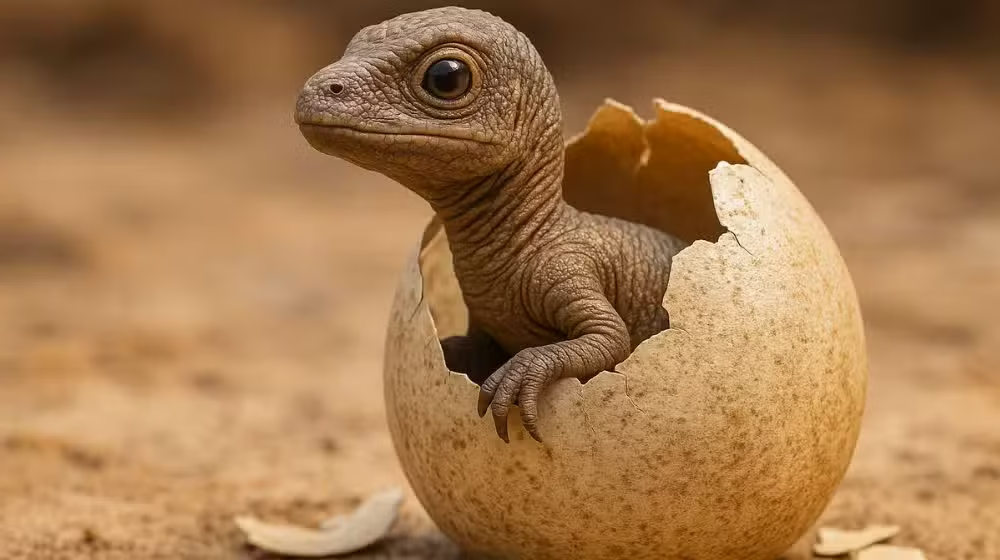
Paleontologists in Argentina have made a stunning discovery. A perfectly preserved dinosaur egg estimated to be around 70 million years old. Found in the Río Negro province of northern Patagonia. The fossilized egg has amazed scientists with its exceptional condition. Making it one of the best-preserved dinosaur eggs ever found in South America.
The egg, similar in size to a modern ostrich egg, looks almost freshly laid despite dating back to the Late Cretaceous period. Researchers believe it likely belonged to a Bonapartenykus, a small carnivorous theropod that once roamed the region. Its rare preservation offers a rare opportunity to study the reproductive biology of predatory dinosaurs. Which are known for their fragile, thin-shelled eggs.
Gonzalo Muñoz, a paleontologist at the Argentine Museum of Natural Sciences, said the find was “an extraordinary example of natural preservation.” He explained that eggs from carnivorous dinosaurs are extremely rare because they were fewer in number than herbivores and their eggs were more likely to break down over time.
The discovery took place during Cretaceous Expedition I, a research project exploring ancient ecosystems in northern Patagonia. Alongside the dinosaur egg, scientists found mammal teeth and snake vertebrae, suggesting the area once served as a nesting ground. According to expedition leader Federico Agnolín, several eggs were uncovered in a small cluster, hinting that Bonapartenykus dinosaurs may have nested communally.
Early scans of the egg reveal that it may even contain traces of embryonic material. Which would make it a groundbreaking find in paleontology. Researchers plan to use advanced imaging technology to confirm whether any preserved remains lie inside the shell. If confirmed, the discovery could shed light on dinosaur development and nesting habits from 70 million years ago. Wikipedia’s page on Bonapartenykus
“The preservation gives us a direct window into the prehistoric world,” Muñoz said. “It helps us understand how these creatures reproduced and survived in the harsh conditions of the Cretaceous era.”
The egg and other fossils have been transferred to the Argentine Museum of Natural Sciences in Buenos Aires for detailed study. The discovery has already drawn international attention. With paleontologists from around the world eager to see what the upcoming analyses reveal. National Geographic



[…] the discussions have created a “constructive environment” and that both parties are showing a genuine willingness to move […]